

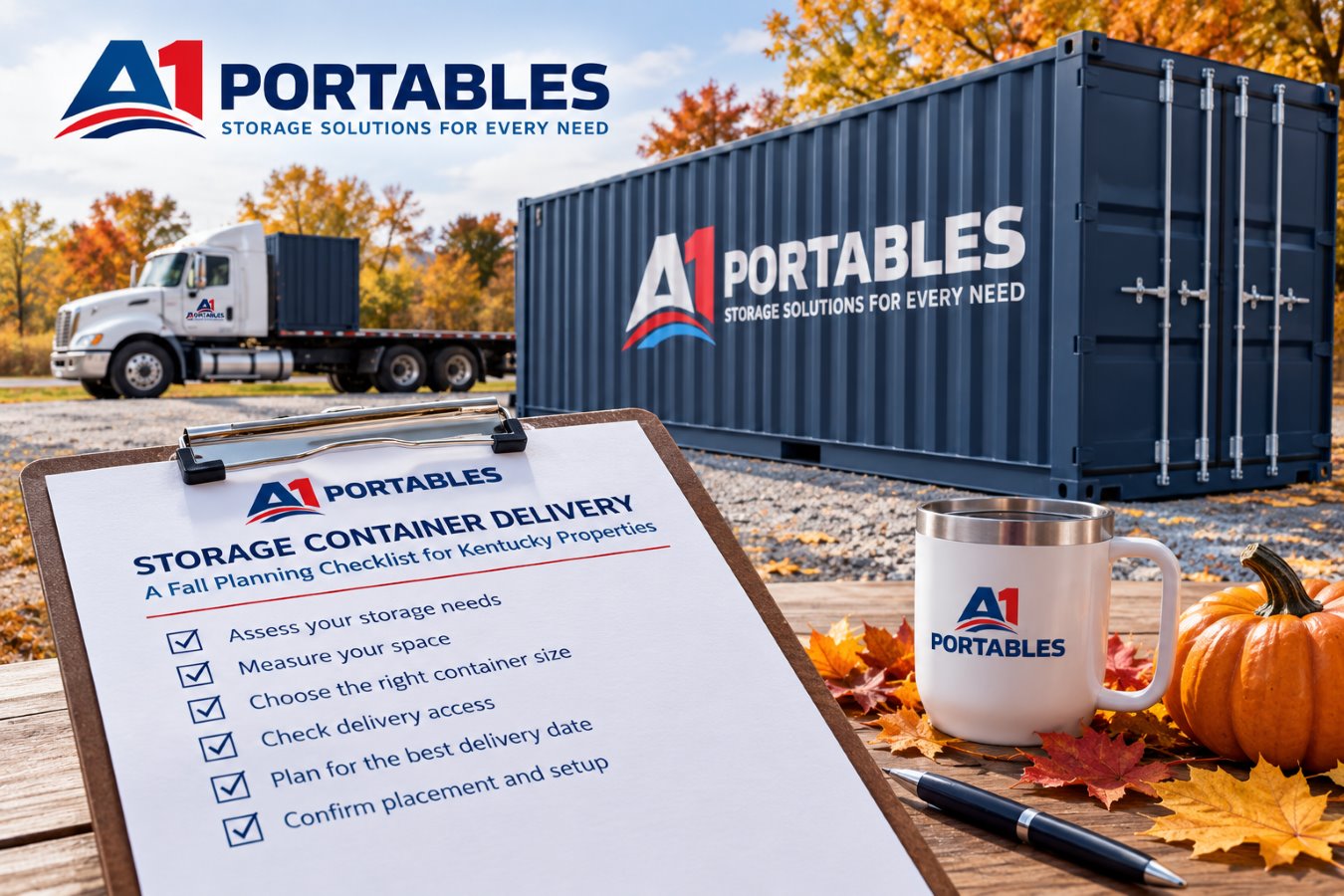
A portable container can provide temporary storage during a renovation, a business inventory change, or a seasonal reorganization. But the most useful planning happens before the truck arrives.
Storage container delivery involves more than choosing a container and pointing to an empty spot. The provider needs to understand the approach, placement area, and how you intend to use the unit. You also need a plan for loading, access, and eventual pickup.
October is a practical time to review these details before fall projects and holiday preparations become busier. For Kentucky homeowners and businesses, this checklist explains what to gather, what to measure, and what to confirm with A1 Portables.
Start With What You Need to Store
Write a short inventory before selecting a container. Group the contents by size, frequency of use, and handling needs.
For a home renovation, that might include furniture, boxed household items, and supplies waiting for installation. For a business, it could involve approved inventory or equipment that needs temporary space.
Identify items that may need special environmental conditions. Do not assume a standard container provides temperature or humidity control simply because it has enclosed walls and doors.
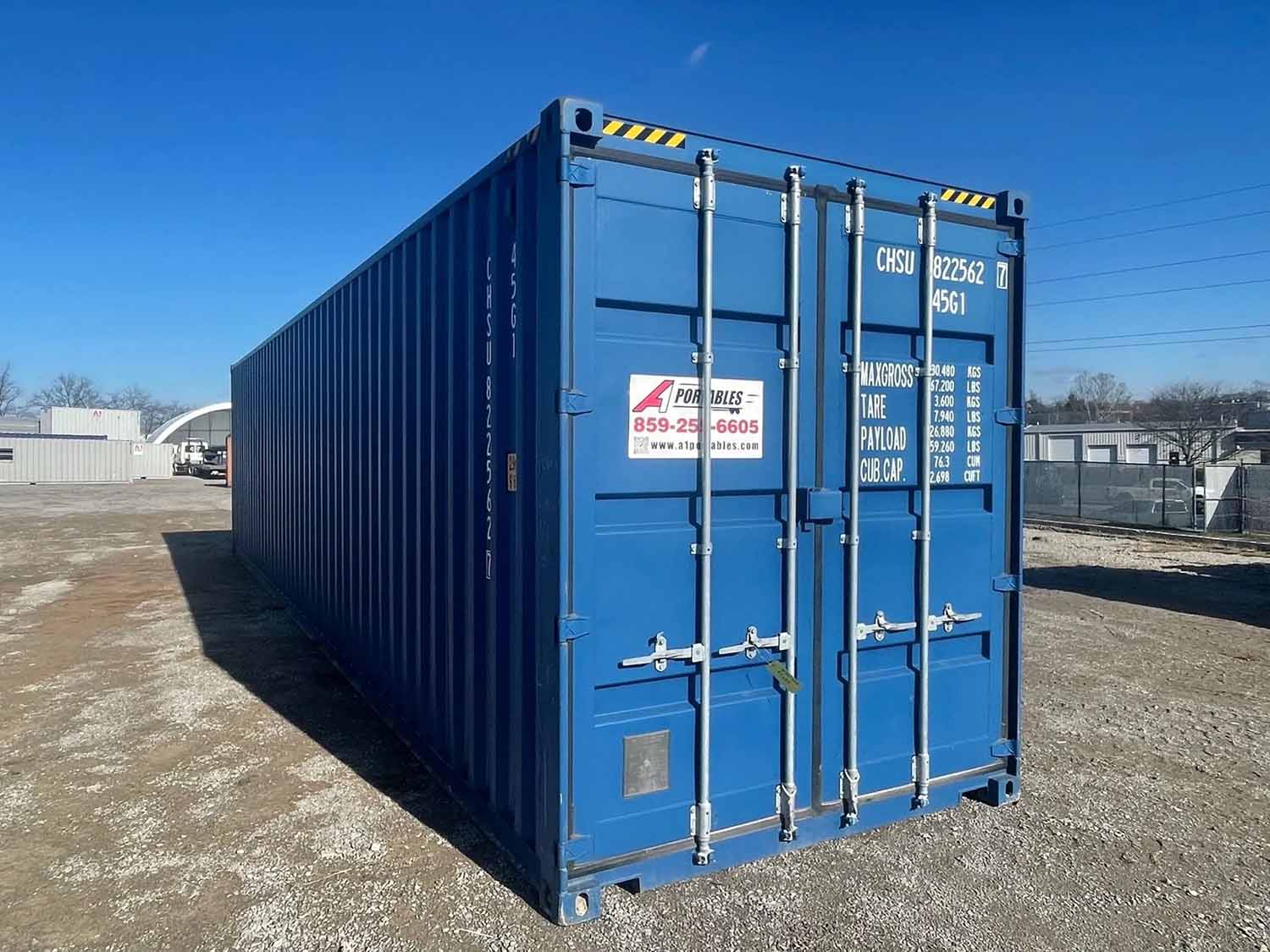
Ask the provider about permitted contents and available unit types. A1 Portables lists a range of storage container options, including specialty units. Confirm the actual features and availability for your intended use.
Separate storage from active use
A container used to hold belongings is different from a workspace where people will regularly operate equipment.
If your plan involves power, heating, business operations, or occupancy, explain that before choosing the unit. Storage equipment should not be assumed suitable for every other application.
Choose Size Around the Loading Plan
The quantity of belongings matters, but so does how they will fit. Large furniture and awkward equipment can consume space differently from uniform boxes.
Measure the largest items and note which can be disassembled appropriately. Consider the usable interior dimensions and door opening of the actual unit offered.
Then decide whether you need to retrieve items during the rental. A tightly packed container may hold everything but make frequent access inconvenient.
Ask the provider to help evaluate the proposed load. A rough inventory and a few measurements are more useful than saying you need room for “a garage’s worth of stuff.”
Check the Entire Delivery Route
Begin at the property entrance and follow the route to the proposed placement area. Look at gates, turns, parked vehicles, branches, overhead obstructions, slopes, and surface conditions.
A delivery vehicle needs a different amount of room from a passenger car. Do not assume that because your car reaches the area, the delivery equipment can do the same.
Take photographs from several positions so the provider can see both the approach and the destination. Include any narrow or difficult sections.
Ask for the access requirements for the specific truck, container, and delivery method. Avoid relying on a clearance measurement found online for a different provider’s equipment.
Include the setup activity around delivery
If a renovation is underway, scaffolding, materials, dumpsters, or contractor vehicles may occupy the route.
Coordinate the delivery with the project team. A route that was open during the initial conversation may be blocked when the truck arrives.
Select a Placement Area With the Provider
Choose a proposed location, then ask A1 Portables to assess its suitability. Explain the surface, drainage conditions, nearby structures, and how the area is used.
Do not assume every grassy, gravel, or paved area is appropriate. Suitability depends on the actual site and delivery requirements.
The location should also support daily use. Consider how you will move items between the building and the container without creating an awkward or obstructed route.
If the container will remain during changing weather, discuss what happens when the surrounding ground becomes wet or soft. The provider can explain any preparation needed for the specific placement.
Decide Which Direction the Doors Should Face
Door orientation is easy to overlook until the container is in place. Think about how items will enter and how you will reach the doors afterward.
Allow for the door operation and working area required by the actual unit. Ask the provider what space needs to remain available.
For a renovation, the most convenient orientation may be toward the building’s loading route. For a business, it may need to relate to an existing staging or receiving area.
Tell the provider your preference before delivery and confirm whether it is feasible. Do not assume the unit can be turned or repositioned casually after it has been placed.
Review Site Permissions Before Scheduling
Depending on the property, temporary placement may involve a landlord, property manager, homeowners association, or local authority.
Ask the appropriate party what requirements apply to the location and intended rental period. Do not treat a container rental agreement as permission to place it anywhere.
If the proposed area is near a property boundary, public route, or shared access, clarify the arrangement before confirming delivery.
Keep any required approval with your project records. This is especially useful when several people are coordinating the property and the rental.
Prepare for Fall Changes at the Site
October conditions can change between a walkthrough and delivery day. Rain, fallen leaves, and ongoing work may affect the approach or the space around the container.
Review the route again shortly before delivery. Remove movable obstructions where appropriate and let the provider know if conditions differ from the original description.
If the placement area is no longer suitable, discuss alternatives rather than asking the driver to improvise. A backup plan should still be reviewed for access and use.
Keep the container accessible during the rental. Seasonal decorations, equipment, or accumulated materials should not quietly take over the route you planned.
Organize the Contents Before Loading
Pack and label items according to the way you expect to retrieve them. Put frequently needed contents in an accessible location rather than behind everything else.
Use appropriate packaging and handling methods for the items involved. Ask about the unit’s limits and follow the provider’s loading instructions.
Create a simple inventory with box labels or item groups. It can save time when the project team needs one specific tool, fixture, or document.
Avoid filling every available space without considering safe access. If moving a heavy or awkward item requires specialist help, arrange it rather than relying on an improvised lift.
Keep a designated access area
If you plan to enter the unit regularly, discuss how the interior should remain usable. A storage plan should consider retrieval as well as initial packing.
The exact arrangement depends on the contents and container. Do not assume a layout suitable for boxes also works for bulky furniture or equipment.
Match Environmental Requirements to the Actual Unit
Furniture, documents, electronics, and other contents may have different storage requirements. Review the care instructions for sensitive items before choosing the unit.
Ask whether the offered container provides the conditions you need and what limitations apply. Standard storage and a specifically equipped climate-controlled option are different arrangements.
Do not assume ventilation, insulation, or temperature control from a product photograph. Confirm the features of the actual container being quoted.
If the proposed contents are not suitable for that unit, discuss another option. The important decision is whether the storage environment matches the items, not simply whether they fit.
Clarify Security and Access Responsibilities
Ask what locking arrangement is supplied, what additional equipment is permitted, and who will control access.
For a household project, decide which family members and contractors need entry. For a business, identify the responsible staff and how access will be managed.
Keep the inventory and access plan together. If several people retrieve supplies, a shared record can reduce confusion about what has been moved.
A lock does not justify a guarantee against loss or damage. Ask about the rental terms and any relevant insurance questions before choosing what to store.
Plan Pickup at the Same Time as Delivery
The provider will need an appropriate route when the rental ends. Keep that requirement in mind as the surrounding project develops.
A new fence, completed landscaping, parked equipment, or construction materials can affect access later. Tell the provider about changes that may alter the pickup plan.
Ask how to arrange pickup, how much notice is needed, and what condition the unit must be in. Confirm any emptying or cleaning responsibilities.
If the rental may continue longer than expected, discuss the extension process early. Do not assume availability or billing arrangements without reviewing the terms.
What to Include in Your Quote Request
Prepare the property address, intended use, approximate rental period, inventory, and photographs of the route and placement area.
List any special unit requirements and explain whether you will need regular access to the contents. Include preferred door orientation and known site constraints.
Ask the quote to clarify the unit, delivery, pickup, rental terms, and any additional charges or responsibilities.
Comparing these details helps you assess the whole arrangement. A monthly rental figure alone does not establish the full scope of storage container delivery and use.
Frequently Asked Questions
How do I prepare for storage container delivery?
Gather an inventory, identify a proposed placement area, and photograph the complete access route. Tell the provider about gates, turns, overhead obstructions, slopes, and soft surfaces. Confirm the requirements for the specific unit and delivery vehicle before making site preparations or finalizing the schedule.
Can a storage container be placed on grass?
It depends on the site, ground conditions, equipment, and the provider’s requirements. A grassy area should be assessed rather than assumed suitable. Explain how it behaves after rain and how long the container will remain. Follow the provider’s guidance about placement and any necessary preparation.
How much clearance does a delivery truck need?
The required clearance depends on the truck, container, delivery method, and route. Ask A1 Portables for the requirements for your actual order. Provide photographs and measurements where requested. A figure from another company’s website may not apply to the equipment delivering your container.
Are all portable storage containers climate-controlled?
No. Do not assume a standard unit controls temperature or humidity. Ask about the features of the actual container and whether they suit your contents. A1 Portables lists specialty options, but their availability and specifications should be confirmed before you select storage for sensitive belongings.
What should I confirm before a rented container is picked up?
Ask about notice, emptying, cleaning, and access requirements. Keep the removal route clear throughout the rental and report site changes that may affect pickup. Confirm how an extension works if the project is delayed rather than assuming the original arrangement can continue automatically.
Does A1 Portables provide storage containers in Kentucky?
A1 Portables offers storage containers for rental and sale and identifies Kentucky among its service areas. Contact the company with your address, intended use, and timing to confirm delivery availability. Review the quoted unit and site requirements before making a final decision.
Plan Your October Storage Project With A1 Portables
A clear plan for storage container delivery begins with the contents, the site, and the full rental period. Explore A1 Portables’ storage containers and request a quote, or call 859-413-3547 to discuss your Kentucky property and fall storage needs.