

If you’re planning a wedding, 5K, festival, company picnic, or school carnival, short-term event restroom rental can be the most forgettable line item—and that’s exactly what you want. When restrooms work, no one notices. When they don’t, lines grow, guests complain, and your carefully planned schedule slips. This playbook shows you how to order the right quantity and mix, place units to prevent lines, coordinate service, and handle power/water for trailers. You’ll also get checklists, sample layouts, and budgeting tips from the field—plus how A1 Portables keeps delivery, servicing, and pickup on time.
What Determines How Many Units You Need?
The Three Variables That Matter Most
- Peak attendance (the maximum bodies onsite at once, not ticket sales spread over the day).
- Duration (include doors-open, breaks/intermissions, and teardown—guests still use restrooms while vendors pack).
- Beverage profile (alcohol and coffee increase usage by 15–30%).
Quick formulas:
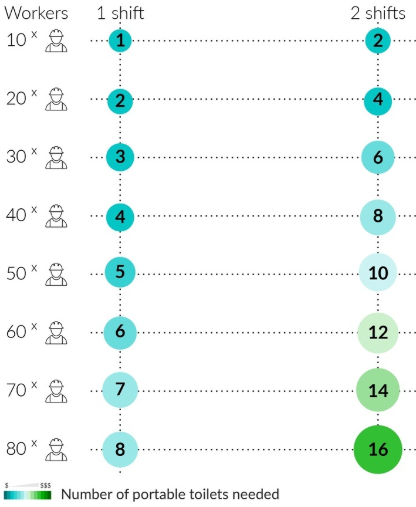
- Short events (≤4 hours): 1 standard unit per 50–75 guests. Use the low end if serving alcohol or if your brand standard is “no noticeable lines.”
- Long events (6–10 hours): 1 standard unit per 35–50 guests. Add a mid-event service.
- Hand wash stations: 1 per 3–4 restrooms, plus extra near food and beer.
Example: 300-guest, 6-hour food festival with beer/wine
- Standard units: 6–8 → bump 9–10 for beverages
- ADA units: 2 (≥5% of total; minimum one per cluster)
- Hand wash stations: 3
- VIP or chef area: 1 small restroom trailer (optional)
Tip: Plan for surges (gates opening, halftime, intermission). If crowds peak in bursts, choose the higher unit count and distribute pods near chokepoints.
Choosing the Mix—Standard Units, ADA, and Trailers
Standard Porta Potties (Your Reliable Workhorse)
- Use for: Most general audiences—fairs, races, block parties, club tournaments.
- Advantages: Affordable, quick to deploy, easy to scatter in multiple clusters.
- Enhancements: Interior sanitizer, exterior lighting after dusk, anti-slip flooring.
ADA-Compliant Units (Required and Appreciated)
- Why: Accessibility compliance and equitable guest experience.
- Ratios: At least 5% of total units, never fewer than one per cluster.
- Placement: Firm, level ground with unobstructed paths and turning radii.
Restroom Trailers (Premium/VIP Experience)
- Use for: Weddings, backstage/VIP lounges, sponsor suites, chef’s row, green rooms.
- Benefits: Flush toilets, running water sinks, mirrors, climate control, interior lighting—guests feel taken care of.
- Typical requirements:
- Power: 2×20A/120V dedicated circuits (confirm for your model).
- Water: Pressurized spigot or onboard tank fill.
- Site: Level surface with truck access for setup and pickup.
- Power: 2×20A/120V dedicated circuits (confirm for your model).
Blended plan: Place standard units for general areas and one small trailer for VIP/sponsors/backstage. You’ll elevate experience where it counts while keeping total cost reasonable.
Placement That Prevents Lines (and Complaints)
Think Clusters, Not Orphans
- Stage pods of 4–8 units at entrances, food courts, near stages, and kids’ areas.
- Ensure at least one ADA unit per pod.
- Put hand wash stations right beside food and beverage lines.
Level, Lit, and Signed
- Choose level ground (pavement/gravel preferred). Use ground mats/plywood to protect lawns and add stability.
- Provide lighting if any activity continues after dark (tower lights or venue fixtures).
- Add directional signs from main walkways—lines move faster when guests see multiple pods.
Leave Room for Service Vehicles
- Delivery, mid-event service, and pickup require truck access.
- If barricades go up, stage units before barricading and mark a service lane on your site map.
Cleaning & Servicing—One Day vs. Multi-Day
One-Day Events
- For high-volume or hot weather, schedule a mid-event sweep (pump, restock, quick sanitize).
- Assign a volunteer/attendant to spot-check every hour (paper, sanitizer, any spills).
Multi-Day Festivals
- Nightly pump and full restock.
- Deep sanitize high-visibility units (VIP, backstage, near food).
- Rotate a spare unit into high-traffic pods to keep them fresh.
A1 Portables will model service cadence based on duration, headcount, and beverage profile—so your short-term event restroom rental performs like clockwork.
Power & Water for Restroom Trailers (No Surprises)
Standard Hookups
- Power: Two dedicated 20A/120V circuits on separate breakers.
- Water: Pressurized spigot with hose connection (or onboard tank as fallback).
- Waste: Onboard tanks sized for your crowd; we’ll pump as needed.
Off-Grid Plans
- Quiet generators sized to the trailer’s draw (we’ll provide specs).
- Onboard fresh water with a refill plan.
- Scheduled pumpouts for long days or heavy VIP use.
Not sure what your venue can provide? We’ll coordinate with the venue manager, verify distances, and map cable/hose runs.
Example Layouts (Copy These Ideas)
Layout A — Wedding at a Farm Venue (150 guests)
- 1 small trailer by reception tent (power/water verified)
- 2 standard units discreetly near parking
- 1 ADA unit near the cocktail lawn
- 2 hand wash stations (one by bar, one near food)
Notes: Add pathway lights and discreet signage. Assign an attendant for 5-minute checks.
Layout B — 5K/10K Race + Kids’ Fun Run (600 participants)
- Pod 1 (start/finish): 10 standard + 2 ADA + 3 hand wash
- Pod 2 (registration/packet pickup): 4 standard + 1 ADA + 1 hand wash
- Course out-and-back turn: 2 standard (volunteers only)
Notes: Place the main pod slightly before the finish chute to reduce crowding.
Layout C — Food & Music Festival (2,500 over 8 hours)
- Four perimeter pods of 10 standard + 2 ADA each
- VIP trailer backstage (2-door)
- 8 hand wash stations near vendor clusters and beer garden
- Mid-event service during opening act changeover
Notes: Add tower lights at two pods. Provide a small operations unit near command tent.
Budgeting—Know What Drives Cost (and How to Save)
Main Cost Drivers
- Quantity × days (units and trailers)
- Delivery distance & placement complexity (off-road access, hills)
- Trailers vs. standard units (amenities add value and require hookups)
- Mid-event service and optional attendants
Smart Ways to Stretch the Budget
- Use standard units for general guests; reserve trailers for VIP/sponsors/wedding party.
- Hit ADA ratios exactly (≥5% total and at least one per cluster).
- Cluster units to simplify service and shorten lines.
- Time service sweeps during intermissions for maximum impact.
Ask for a line-item quote from A1 Portables—you’ll see quantity discounts and service options side by side.
Sustainability & Guest Comfort
Smaller Footprint, Happier Guests
- Choose hand wash stations with refillable water vs. single-use bottles.
- Stage units in shade (lower interior temps reduce odor and improve comfort).
- Use eco-friendly deodorizers and recycled-content paper (available on request).
- Provide separate waste and recycling bins near food areas to keep restrooms cleaner.
Permits, Risk, and Accessibility—Cover Your Bases
Permits & Venue Rules
- Some parks/municipalities require an event permit with a restroom plan.
- Check setback distances, generator rules, and service windows (quiet hours).
- Confirm fire lanes remain clear; we’ll place units outside those paths.
Accessibility Compliance
- Provide ADA units in every cluster on stable, accessible routes.
- Ensure turning radius inside and level landings outside the door.
- Use clear signage pointing to accessible restrooms from main routes.
Risk Planning
- Stake or ballast units in wind-exposed areas.
- Use ground mats to avoid mud hazards.
- Keep a spill kit and contact number at the operations tent.
- Share the service schedule and the A1 Portables hotline with your on-site lead.
Weather Contingencies—Heat, Cold, and Rain
Heat
- Shade wherever possible (tents or tree lines).
- Extra mid-day service for high temps; add deodorizer refresh.
- Increase hand wash capacity near food and kids’ zones.
Cold
- Schedule service earlier in the day; prevent hose freezes on trailers.
- Use heated trailers for VIP and crew morale during winter festivals.
Rain
- Mats or plywood at entrances to prevent mud tracking.
- Avoid low spots; move clusters slightly upslope; consider a dry creek route for flow-through venues.
Communication Plan—Keep Everyone on the Same Page
Before the Event
- Share a site map with unit counts, clusters, ADA locations, service lanes, power/water runs.
- Confirm delivery windows and pickup times.
- Provide a single point of contact for A1 Portables onsite.
During the Event
- Post the service sweep time on the ops board.
- Assign a restroom attendant or volunteer per large pod during peaks.
- Keep spare paper and sanitizer refills in the ops tent.
After the Event
- Sweep for lost-and-found items before pickup.
- Confirm any overnight hold requirements with the venue.
- Request a quick post-event report (counts, service notes, suggestions) to make next year even smoother.
Myths vs. Facts (So You Can Answer Stakeholders)
Myth: “We’ll save money with fewer units—people can wait.”
Fact: Lines cost more in vendor sales and guest satisfaction than a couple of extra units.
Myth: “Trailers are only for luxury weddings.”
Fact: A small trailer backstage or for sponsors creates goodwill and keeps key people onsite.
Myth: “Any flat spot will do.”
Fact: Service truck access and ADA routes matter as much as flatness—and affect your permit.
Myth: “We don’t need hand wash if we have sanitizer.”
Fact: Food events + families = real sinks. Add stations near vendors to reduce restroom congestion.
Quick Reference—Order Cheat Sheet
Short events (≤4 hrs):
- Standard: 1 per 50–75 attendees (use 50 if alcohol/coffee)
- ADA: ≥5% of total, at least one per cluster
- Hand wash: 1 per 3–4 restrooms
- Trailer: 1 small per 150–250 VIP/special-access guests
Long events (6–10 hrs):
- Standard: 1 per 35–50 attendees
- Schedule a mid-event service; nightly service for multi-day runs
Why Organizers Choose A1 Portables
On-Time, Every Time
We route deliveries with backups and arrive before gates open—so staging, signage, and tests are done without a scramble.
Cleanliness Guests Notice
Deodorized tanks, stocked paper and sanitizer, slip-resistant floors, and optional attendants for premium events.
Expert Help with Placement & Permits
From ADA ratios to generator sizing, we help you check every box and keep inspectors happy.
One Vendor, One Invoice
Standards, ADA, trailers, sinks, tanks, (and fencing if needed)—one schedule, one point of contact, zero finger-pointing.
Ready to lock your dates and get a precise count for your crowd? Contact A1 Portables for a fast quote, site map review, and a dependable plan—book your free consultation today!